Quick Answer
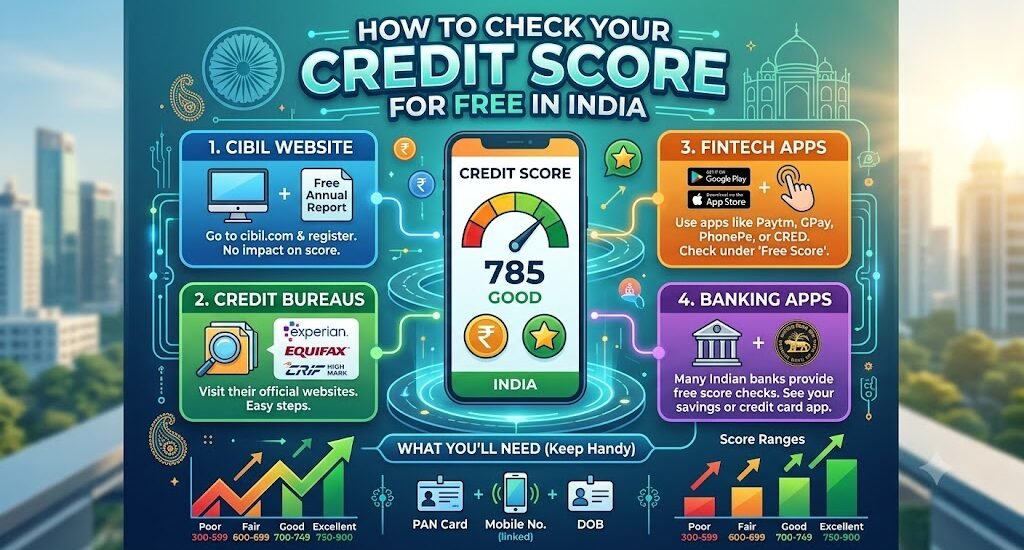
You can check your credit score and credit report online through an authorised credit information company in India. The Reserve Bank of India requires credit information companies to provide eligible individuals with one free full credit report, including the credit score, once during each calendar year after identity authentication. <Cite refs={[“turn409206search0″,”turn409206search8”]} />
Your credit report contains details of your borrowing history, repayment records, outstanding balances and credit enquiries. Reviewing it regularly can help you identify incorrect information before it affects a loan or credit card application.
Key Facts About Free Credit Reports in India
- You can request one free full credit report per calendar year from each credit information company that holds your credit history.
- The report includes your credit score and available credit account information.
- You may need to complete identity verification before accessing the report.
- Checking your own report is generally treated as a soft enquiry and does not lower your credit score.
- A credit report and a credit score are related, but they are not the same thing.
- You can dispute inaccurate information through the relevant credit bureau and lender.
- A good credit score does not guarantee loan approval.
What Is a Credit Score and Credit Report?
A credit score is a numerical summary of your credit history, while a credit report provides the underlying details used to assess your borrowing behaviour. Lenders may review both when evaluating a loan or credit card application.
In India, credit information companies maintain credit data received from banks and other credit institutions. TransUnion CIBIL, Experian, Equifax and CRIF High Mark are examples of credit information companies operating in the Indian market.
A credit score may differ between credit bureaus because their data, scoring models and reporting records may vary. Do not assume that one score will be identical across every bureau.
1. Where Can You Check Your Credit Score for Free?
You can request your free annual report directly from a credit information company. Use the official website of the bureau and check its current process before submitting personal details.
| Credit bureau | Official website |
|---|---|
| TransUnion CIBIL | cibil.com |
| Experian India | experian.in |
| Equifax India | equifax.co.in |
| CRIF High Mark | crifhighmark.com |
The RBI’s free report requirement applies to each credit information company that holds your credit history. Additional reports or monitoring services may be subject to charges depending on the provider and service selected.
Avoid assuming that every website advertising a free score provides the same full report or that every additional feature is free. Check the terms before subscribing to a paid plan.
2. How to Check Your CIBIL Score Online
You can obtain your CIBIL Score and report through the official TransUnion CIBIL consumer service. The exact screens may change, so follow the instructions shown on the official website.
Step 1: Visit the official CIBIL website
Open TransUnion CIBIL and look for the consumer credit score and report section.
Step 2: Choose the free report option
Find the option to access your free annual CIBIL Score and report. If you have already used the free report for the current calendar year, the option may not be available again until the next eligible period.
Step 3: Enter your details
Provide the information requested to identify your credit profile. This may include personal details and information used to match your credit records.
Step 4: Complete identity verification
Follow the website’s authentication process. Use only the official website and never share your password, one time password or banking credentials with an unverified person.
Step 5: Access your report
After successful verification, review the score and the available credit report. Save a copy securely if you need it for your records.
TransUnion CIBIL explains its free annual report process on its official consumer support page.
3. How to Read Your Credit Report
Your credit report provides more detail than the score alone. Review each section to understand which accounts and repayment records may influence how lenders assess your creditworthiness.
| Report section | What to check |
|---|---|
| Personal information | Name, date of birth and other identifying details |
| Credit accounts | Loans and credit cards associated with your profile |
| Payment history | Whether payments are recorded as on time or overdue |
| Outstanding balances | Amounts reported as due on each account |
| Account status | Whether accounts are open, closed or otherwise reported |
| Credit enquiries | Records of lenders checking your credit information |
| Disputed information | Any entries you have challenged and their status |
Pay particular attention to accounts you do not recognise, balances that appear incorrect and payments that you believe were recorded inaccurately. Keep statements, payment receipts and loan closure documents available to support a dispute.
4. What Is Considered a Good CIBIL Score?
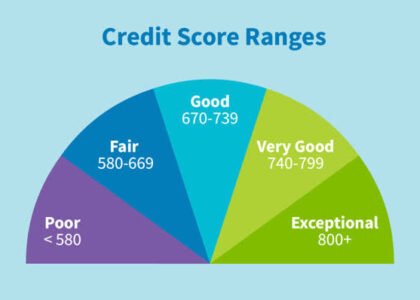
CIBIL Scores generally range from 300 to 900. A score closer to 900 is generally viewed more favourably, but individual lenders set their own eligibility criteria and may consider other factors.
| CIBIL Score range | General interpretation |
|---|---|
| 300 to 549 | Lower score range |
| 550 to 649 | May indicate areas requiring improvement |
| 650 to 749 | May be viewed more favourably by some lenders |
| 750 to 900 | Generally a strong score range |
These ranges are a simplified educational guide, not official lending categories or guaranteed approval thresholds. Different lenders may use different cut offs and assessment methods.
Your income, employment stability, existing debt, repayment capacity and loan requirements can all affect a lending decision. A high score does not guarantee approval or a particular interest rate.
If your score needs improvement, read our guide on how to improve your CIBIL Score in India.
5. What Should You Check for Errors?
Incorrect credit information can create problems when you apply for new credit. Review the report carefully and compare it with your own financial records.
Check for these common issues:
- A loan that you never took.
- A credit card that does not belong to you.
- A payment incorrectly marked as late.
- An outstanding balance that does not match the lender’s records.
- A closed loan still shown as active.
- Duplicate accounts or incorrect account details.
- A credit enquiry that you do not recognise.
If you identify a possible error, first confirm the facts with the lender where appropriate. You can then raise a dispute with the credit information company and provide supporting evidence.
Credit bureaus generally rely on information supplied by credit institutions. The bureau may need the lender to verify or correct the record before the report can be updated.
6. How to Correct Errors in Your Credit Report
You should dispute inaccurate information rather than paying an agent who promises to remove negative entries. Genuine repayment records cannot simply be deleted because you do not want them to appear.
Follow these steps:
- Identify the incorrect entry and note the account details.
- Gather relevant evidence, such as payment receipts or a loan closure letter.
- Raise a dispute through the credit bureau’s official process.
- Contact the lender responsible for the reported account if needed.
- Save the dispute reference number and related correspondence.
- Check the report again after the investigation is completed.
If the issue remains unresolved, follow the relevant grievance escalation process. For information about credit reporting and dispute rights, consult the Reserve Bank of India.
7. Does Checking Your Own Credit Score Lower It?
Checking your own credit score is generally treated as a soft enquiry and does not reduce your score. This means you can review your credit profile to understand your financial position without making a loan application.
A hard enquiry may be recorded when a lender checks your credit as part of a credit application. Several applications within a short period can affect how lenders assess your borrowing behaviour.
Review your score before applying for a major loan, such as a home loan or personal loan. This gives you time to correct errors and review existing debt before submitting an application.
8. How Often Should You Check Your Credit Report?
Checking your credit report periodically helps you identify reporting problems and understand changes in your borrowing history. You can use your free annual report to conduct a detailed review and check your credit profile again when you are preparing for a major credit application.
You may also receive credit score updates through other services, but check whether the service is free and what data it uses. Do not pay for a subscription unless you understand what additional features it provides.
The RBI has directed credit institutions to report credit information to credit information companies at monthly intervals or shorter mutually agreed intervals. This means updates may not appear immediately after a payment or account change. <Cite refs={[“turn409206search4”]} />
9. What If You Have No Credit History?
If you have never used a loan or credit card, a bureau may have limited information with which to assess your credit profile. This does not automatically mean that you have a poor repayment history.
You do not need to take out a loan purely to create a credit score. If you genuinely need credit, compare the costs and conditions of suitable products and borrow only an amount you can repay comfortably.
Build a healthy financial foundation by budgeting, maintaining emergency savings and avoiding unnecessary borrowing. If you already have credit accounts, make payments on time and monitor the information reported by lenders.
Pros and Cons of Checking Your Credit Report
Advantages
- Helps you understand your borrowing history.
- Allows you to identify accounts or enquiries you do not recognise.
- Makes it easier to detect inaccurate repayment information.
- Helps you prepare before applying for a loan.
- Supports more informed debt management decisions.
Limitations
- Checking your report does not automatically improve your score.
- Credit information may not reflect a recent payment immediately.
- Different credit bureaus may show different scores.
- A credit score does not guarantee loan approval.
- Additional monitoring features may involve charges.
The most useful reason to check your credit report is to understand the information lenders may see and correct errors when appropriate.
Example: Reviewing a Credit Report Before a Home Loan Application
Suppose you plan to apply for a home loan in six months. You check your report and find that a personal loan you repaid is still shown as outstanding.
Instead of applying immediately, you gather the loan closure letter and contact the lender. You raise a dispute through the credit bureau and monitor the case until the information is corrected or the outcome is explained.
This process may help you avoid applying with inaccurate information in your report. However, correcting an error does not guarantee a home loan approval because the lender will also assess income, existing liabilities, property details and other eligibility criteria.
Expert View: How to Use Your Credit Report Effectively
A credit report is most useful when you review the account details rather than focusing only on the score. Check whether the reported balances, repayment records and account status match your own records, then follow the formal process to investigate discrepancies.
Before applying for a loan, review your outstanding debt and monthly repayment commitments. A healthy credit profile is supported by accurate reporting, timely payments and borrowing that fits your financial capacity.
Frequently Asked Questions
1. Can I check my CIBIL Score for free?
Yes. TransUnion CIBIL offers one free CIBIL Score and report each calendar year. Follow the official website’s process and complete any required identity verification.
2. Can I get a free credit report every year in India?
Yes. The RBI requires each credit information company to provide eligible individuals with one free full credit report, including the credit score, once per calendar year. You can request the report from a bureau that holds your credit history.
3. What is the difference between a credit score and a credit report?
A credit score is a numerical summary of your credit history. A credit report contains the underlying information, such as accounts, outstanding balances, payment records and enquiries.
4. Does checking my credit report affect my score?
Checking your own report is generally treated as a soft enquiry and does not reduce your score. A lender’s credit check linked to an application may be recorded as a hard enquiry.
5. Why is my credit score different across bureaus?
Credit information companies may have different reporting data, update timings and scoring models. Differences do not automatically mean that one report is wrong. Compare the account information and investigate any inaccurate entries.
6. What should I do if my credit report contains a loan I never took?
Contact the credit bureau through its official dispute process and notify the lender associated with the account. Provide the evidence requested, save the complaint reference and monitor the investigation.
7. How long does it take to correct a credit report error?
The time depends on the issue, the bureau’s investigation and the lender’s response. Follow the official process, keep your reference number and check the applicable grievance timelines rather than assuming every dispute will be resolved within the same period.
8. Is a free credit score website safe to use?
Use the official bureau website or a service you have independently verified. Review the privacy policy and fees, and do not share one time passwords, passwords or banking credentials with unverified people.