
Personal finance is the process of managing your income, expenses, savings, investments, debts, and financial goals. For individuals and families in India, good financial planning can help manage monthly expenses, prepare for emergencies, purchase a home, and build wealth over time.
You do not need a high salary to start managing your money effectively. The first steps are to understand where your money goes, spend within your means, build an emergency fund, manage debt responsibly, and choose financial products that match your needs.
This personal finance guide for Indians explains the essential principles of money management, from creating your first budget to planning for retirement. Whether you are a student, salaried employee, self employed professional, or married couple, you can use these principles to make more informed financial decisions.
Quick Answer: How to Manage Your Personal Finances in India
Effective personal finance management starts with tracking your income and expenses, saving regularly, managing debt, maintaining suitable insurance, and investing according to your financial goals and risk tolerance. Create a monthly budget, build an emergency fund, review your credit report, and plan for major expenses before committing to them.
Start with small, achievable changes. Once your everyday finances are under control, you can gradually work towards larger goals such as buying a house, funding education, or preparing for retirement.
Key Facts About Personal Finance
- Budgeting: Helps you understand your income, expenses, and available savings.
- Saving: Creates money for emergencies and planned purchases.
- Emergency fund: Provides accessible money for unexpected expenses or income disruptions.
- Debt management: Helps you control borrowing costs and avoid unnecessary financial pressure.
- Insurance: Can protect your finances against specified medical expenses and other covered risks.
- Investing: Can help you work towards long term goals, but investment returns are not guaranteed.
- Credit management: Responsible borrowing and timely payments can support your credit history.
- Tax planning: Helps you understand your tax obligations and evaluate eligible tax benefits.
The right financial strategy depends on your income, family responsibilities, age, existing assets, debts, and future plans.
1. Create a Monthly Budget
A monthly budget is the foundation of personal finance because it shows how much money comes in, where it goes, and what you can save. Without a budget, it is easy to underestimate small expenses and reach the end of the month with little money remaining.
Start by recording your monthly take home income. Include your salary, business income, freelance earnings, and other regular sources of money.
Next, divide your expenses into three main categories.
- Needs: Rent, groceries, electricity, transport, essential healthcare, and required loan payments.
- Wants: Dining out, entertainment, non essential shopping, and optional subscriptions.
- Financial goals: Savings, debt reduction beyond required payments, and investments.
Use the 50/30/20 budget rule
The 50/30/20 budget rule is a simple framework that allocates 50% of take home income to needs, 30% to wants, and 20% to savings and financial goals.
For example, someone earning ₹40,000 per month could use this allocation as a starting point.
| Category | Percentage | Monthly amount |
|---|---|---|
| Needs | 50% | ₹20,000 |
| Wants | 30% | ₹12,000 |
| Savings and financial goals | 20% | ₹8,000 |
| Total | 100% | ₹40,000 |
These percentages are guidelines rather than strict rules. If your rent, EMIs, or family responsibilities are high, you may need to allocate more money to essential expenses and adjust the other categories.
Read our detailed guide on the monthly budget planner in India and learn how the 50/30/20 budget rule works.
2. Track Your Monthly Expenses
Expense tracking helps you identify unnecessary spending and understand your actual cost of living. Even small recurring expenses can reduce your ability to save when they accumulate over several months.
Record your spending in a spreadsheet, notebook, or budgeting application. Include cash payments, online purchases, subscriptions, food delivery, transport, and bills paid automatically.
At the end of each month, compare your actual expenses with your budget. Identify categories where you consistently spend more than planned and decide which changes are realistic.
For example, reducing unnecessary spending by ₹1,500 per month could free up ₹18,000 over one year. The actual amount will depend on your current spending habits.
Explore our guide on how to track monthly expenses and learn how to reduce monthly expenses without making your lifestyle unnecessarily restrictive.
3. Build a Savings Habit
Regular saving helps you prepare for future expenses and reduces dependence on borrowing. You do not need to wait until you earn a higher salary to start saving.
A useful starting point is to save a manageable portion of your take home income every month. Some people may be able to save 20% or more, while others may need to begin with a smaller amount because of rent, family responsibilities, or debt payments.
Consider these examples:
| Monthly take home salary | Saving 10% | Saving 20% |
|---|---|---|
| ₹20,000 | ₹2,000 | ₹4,000 |
| ₹30,000 | ₹3,000 | ₹6,000 |
| ₹40,000 | ₹4,000 | ₹8,000 |
| ₹50,000 | ₹5,000 | ₹10,000 |
| ₹60,000 | ₹6,000 | ₹12,000 |
The table shows possible savings targets, not amounts everyone can afford. Calculate your actual expenses before selecting a percentage.
One effective method is to transfer your planned savings amount shortly after payday. This makes saving part of your budget rather than something you do only when money remains.
If you earn ₹30,000 per month, explore our guide on how to save money from a ₹30,000 salary. You can also learn how much you should save every month based on your income and goals.
4. Build an Emergency Fund
An emergency fund is money reserved for unexpected expenses, such as medical bills, urgent repairs, or temporary loss of income. It helps you avoid using high interest loans or credit cards when an unexpected cost arises.
A common starting target is an emergency fund covering three to six months of essential expenses. The amount you need depends on your income stability, dependants, health needs, and financial commitments.
For example, if your essential monthly expenses are ₹25,000, a reserve covering three months would be ₹75,000. A six month reserve would be ₹1,50,000.
You can build this fund gradually by setting aside a fixed amount each month. Keep emergency money accessible rather than placing all of it in investments that may fluctuate in value or take time to withdraw.
If you are starting from zero, set a smaller initial target and increase it as your finances improve.
Read our practical guide on how to build an emergency fund in India and learn how to build an emergency fund on a low salary.
5. Manage Debt and Credit Cards Responsibly
Debt can help finance important purchases, but excessive borrowing can put pressure on your monthly budget. Before taking a loan, calculate the EMI, interest cost, repayment period, and total amount payable.
List your current debts, including personal loans, vehicle loans, home loans, and credit card balances. Pay required instalments on time and review which debts have the highest interest costs.
Credit card balances deserve particular attention because unpaid amounts can attract substantial interest and charges. Whenever possible, pay the full statement balance by the due date rather than relying on minimum payments.
Consider these habits:
- Borrow only when the repayment fits your budget.
- Avoid taking new loans to pay for unnecessary purchases.
- Compare the total borrowing cost before choosing a lender.
- Review your outstanding balances regularly.
- Consider paying down expensive debt before increasing discretionary spending.
If you have several debts, compare their interest rates and repayment terms before deciding how to allocate additional money. Keep some accessible savings for emergencies so that an unexpected bill does not force you to borrow again.
Learn how to pay off debt faster in India for practical repayment strategies.
6. Understand Your Credit Score and Credit Report
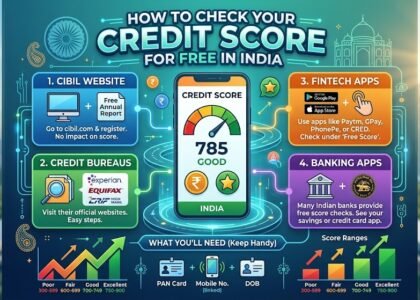
Your credit report records information about your borrowing and repayment history. Lenders may use credit information when evaluating loan and credit card applications, along with income, existing obligations, and their own eligibility criteria.
In India, credit information companies maintain credit records and provide credit reports. CIBIL is one of the credit information companies operating in the country.
Review your credit report for errors, unfamiliar accounts, incorrect personal details, and payments that may have been recorded inaccurately. If you find a mistake, raise a dispute through the relevant credit information company and lender.
To maintain a healthy credit history:
- Pay loan EMIs and credit card bills by their due dates.
- Avoid applying for several credit products within a short period without a clear need.
- Monitor your outstanding credit card balances.
- Check your credit report for errors or unfamiliar activity.
- Borrow only what you can repay comfortably.
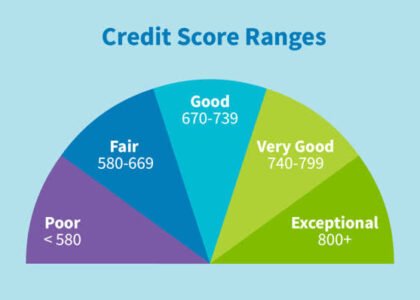
A good credit score does not guarantee loan approval. Lenders consider multiple factors, and credit scores can change as your credit information changes.
Read our guides on how to improve your CIBIL score and how to check your credit score and credit report for free in India.
7. Start Investing According to Your Financial Goals
Investing can help you work towards goals such as retirement, children’s education, or building wealth over time. However, investments involve different levels of risk, and returns are not guaranteed.
Before investing, identify your goal, the amount required, and when you expect to need the money. Your investment choice should reflect your time horizon, ability to tolerate losses, and financial circumstances.
Common investment options in India include:
| Investment option | General purpose | Main consideration |
|---|---|---|
| Bank fixed deposits | Saving money for a defined period | Interest rate, tenure, and withdrawal conditions |
| Recurring deposits | Making regular deposits towards a goal | Maturity period and premature withdrawal terms |
| Mutual funds | Investing across assets through a managed fund | Market risk, fees, and investment strategy |
| Shares | Investing directly in listed companies | Price fluctuations and company specific risk |
| Government backed savings schemes | Saving under the terms of a specific scheme | Eligibility, rules, lock in period, and applicable returns |
| Retirement focused products | Building resources for retirement | Contribution rules, withdrawal conditions, and taxation |
Do not choose an investment only because it has recently delivered high returns. Understand how it works, what risks it carries, and whether you can afford a potential loss.
Can you start investing with ₹1,000?
Some investment products allow relatively small contributions, but the minimum amount depends on the product and provider. A mutual fund systematic investment plan, or SIP, allows you to invest a set amount at regular intervals in an eligible mutual fund.
An SIP is a method of investing, not a guarantee of profit. The value of a market linked investment can rise or fall.
If you are new to investing, learn about the product, costs, diversification, and risk before committing money. Do not invest money needed for essential bills or immediate emergencies.
8. Understand SIPs, Recurring Deposits, and Risk
A systematic investment plan and a recurring deposit both allow regular contributions, but they work differently. A recurring deposit is a bank deposit with defined terms, while an SIP invests money into a mutual fund whose value can fluctuate with the market.
| Feature | SIP in a mutual fund | Recurring deposit |
|---|---|---|
| Type | Market linked investment | Bank deposit |
| Returns | Not guaranteed | Interest terms are specified by the bank |
| Risk | Depends on the underlying fund | Subject to bank deposit terms and applicable protections |
| Value during the term | Can rise or fall | Deposit follows the agreed terms, subject to conditions |
| Suitable use | Goals where market risk and time horizon are appropriate | Planned savings where the deposit terms fit the goal |
Neither option is automatically better for everyone. Consider the timing of your goal, need for access, tolerance for risk, and the product’s terms.
For money needed in the near future, prioritise access and stability. For longer term goals, you may consider suitable market linked investments after understanding their risks.
Read our guide on SIP vs recurring deposit to compare their features in more detail.
9. Choose Health Insurance Carefully
Medical expenses can affect your savings, especially when hospitalisation or ongoing treatment requires significant out of pocket spending. Health insurance can help cover specified medical expenses under the terms of the policy.
When comparing policies, review the sum insured, hospital network, waiting periods, exclusions, co payments, room rent restrictions, and claim procedures. Disclose your medical history accurately and read the policy wording before purchasing.
A low premium does not necessarily mean a policy provides better value. Check the conditions that determine what the insurer will pay and what you may need to pay yourself.
You should also review your coverage periodically as your family structure, income, and healthcare needs change.
Read our guide on how to choose the right health insurance policy in India for a detailed comparison checklist.
For official guidance, consult the Insurance Regulatory and Development Authority of India.
10. Set Financial Goals for Different Stages of Life
Financial goals give your money a clear purpose. Without specific goals, it can be difficult to decide how much to save, where to invest, or which expenses to prioritise.
Write down your goals, estimate the amount required, set a target date, and calculate how much you need to contribute regularly.
Examples of financial goals include:
- Building an emergency fund.
- Saving for a holiday or major purchase.
- Paying for education or professional development.
- Preparing a down payment for a house.
- Planning for marriage or family expenses.
- Building retirement savings.
Separate short term goals from long term goals. Money needed soon should generally be managed differently from money you do not expect to use for many years.
For example, someone planning to purchase a house within two years may prioritise saving for the down payment. Someone planning for retirement several decades away may have a different investment strategy, depending on their risk tolerance and financial position.
Read how to set financial goals in India and explore financial goals by age to organise your priorities.
11. Plan Your Finances Before Major Purchases
Major purchases can affect your finances for years, particularly when they involve loans or ongoing maintenance costs. Before buying a car, house, or other expensive asset, calculate the full cost rather than focusing only on the initial payment or EMI.
For a car, include the down payment, loan interest, insurance, fuel, servicing, parking, and repairs. For a house, consider the down payment, loan EMI, registration costs, maintenance, insurance, and other applicable charges.
Ask these questions before committing:
- Can you afford the initial payment without using your entire emergency fund?
- Will the EMI fit comfortably within your monthly budget?
- Will you still be able to save for other financial goals?
- Have you considered costs beyond the purchase price?
- Could a change in income make the commitment difficult to maintain?
Do not assume that approval for a loan means the purchase is affordable. Lender eligibility and your household budget are different considerations.
Read our guides on financial planning before buying a car and financial planning before buying a house.
12. Review Your Tax Planning
Tax planning involves understanding your tax obligations, keeping accurate records, and evaluating which tax regime and eligible deductions may apply to you. It should be based on current rules and your personal circumstances rather than assumptions about which option is always better.
For eligible individuals, India provides a choice between the new tax regime and the old tax regime under applicable conditions. The new regime is the default regime, while eligible taxpayers may choose the old regime subject to the rules that apply to their circumstances.
The comparison can depend on salary structure, eligible deductions, exemptions, other income, and applicable tax provisions. Check the current assessment year guidance before making a decision.
Use official resources rather than relying only on social media posts or outdated tax calculators. Start with the Income Tax Department’s official guidance for salaried individuals.
For complicated tax situations, consider consulting a qualified tax professional.
13. Manage Lifestyle Inflation
Lifestyle inflation happens when spending rises as income increases. A salary increase can improve your financial position, but the benefit may disappear if every additional rupee is spent on a more expensive lifestyle.
When your income increases, consider directing part of the increase towards savings, debt reduction, insurance, or long term goals before raising discretionary spending.
For example, if your monthly salary rises by ₹5,000, you might choose to save or invest part of that increase while using the rest for additional expenses. The exact split should reflect your financial priorities.
You do not need to avoid every lifestyle upgrade. The aim is to make deliberate choices while ensuring your financial progress keeps pace with your income.
14. Create a Simple Personal Finance Routine
A consistent review routine makes personal finance easier to manage. You do not need to spend hours reviewing every transaction if you establish a few useful habits.
Every week
- Check recent spending.
- Review upcoming bills and payment dates.
- Look for unfamiliar transactions.
- Avoid purchases that do not fit your budget.
Every month
- Compare actual expenses with your budget.
- Transfer your planned savings.
- Review loan balances and credit card payments.
- Check progress towards financial goals.
- Adjust the budget for upcoming expenses.
Every year
- Review your insurance coverage.
- Reassess your emergency fund.
- Check your credit report.
- Review investment allocations and financial goals.
- Review applicable tax rules and filing obligations.
- Update your budget after major changes in income or family circumstances.
A short monthly review can help identify problems before they become more difficult to manage.
Common Personal Finance Mistakes to Avoid
Some money management mistakes can slow financial progress even when income is stable. Avoid these common habits:
- Spending the entire salary before setting aside savings.
- Taking loans without calculating the full repayment cost.
- Relying on credit cards to cover recurring budget shortfalls.
- Investing without understanding the risk.
- Ignoring emergency savings.
- Buying insurance without reading the exclusions and conditions.
- Making tax decisions using outdated information.
- Increasing spending every time income rises.
- Failing to review financial goals when circumstances change.
Good personal finance is not about following one perfect formula. It is about making informed decisions consistently and adjusting your plan as your circumstances change.
Example: A Personal Finance Plan for a ₹40,000 Salary
The following example shows how someone earning ₹40,000 per month might organise a basic household budget. The amounts are illustrative and should be adjusted to actual living costs and responsibilities.
| Category | Monthly amount |
|---|---|
| Housing and household expenses | ₹10,000 |
| Groceries and food | ₹5,000 |
| Transport and utilities | ₹3,000 |
| Family and personal expenses | ₹4,000 |
| Loan payments | ₹4,000 |
| Insurance and planned irregular expenses | ₹2,000 |
| Flexible spending | ₹4,000 |
| Emergency savings and financial goals | ₹8,000 |
| Total | ₹40,000 |
In this example, the person allocates ₹8,000 per month to savings and financial goals, provided all listed expenses are sufficient to cover their actual needs.
That contribution would total ₹96,000 over one year before interest or investment returns, assuming no withdrawals. The person could then increase contributions or adjust the deadline to reach a larger savings target.
The purpose of this example is to show how a budget connects income, expenses, and goals. It is not a recommended allocation for every household.
Pros and Cons of Personal Financial Planning
Benefits
- Helps you understand your financial position.
- Makes monthly spending easier to manage.
- Supports emergency preparedness.
- Helps you plan major purchases and life events.
- Encourages responsible borrowing.
- Creates a structured approach to saving and investing.
- Helps you review insurance and tax obligations.
Limitations
- Unexpected expenses can disrupt a budget.
- Some financial goals may require more time than expected.
- Investment returns can fluctuate and losses are possible.
- Insurance policies have conditions, exclusions, and limits.
- Financial planning requires regular reviews as income and responsibilities change.
A financial plan should be flexible enough to adapt to real life while keeping your most important priorities in view.
Expert View: Build Your Financial Foundation First
A sound personal finance plan starts with understanding your income, controlling expenses, maintaining an emergency reserve, and managing debt. These steps help you create a stable foundation before taking on additional financial commitments or investment risk.
Once your basic finances are organised, set specific goals and choose savings or investment products that match the amount of time you have and the risks you can accept. Review your plan regularly rather than assuming that one budget will remain suitable forever.
Use trusted sources such as the Reserve Bank of India’s financial education resources, SEBI Investor, and IRDAI when researching financial products.
Frequently Asked Questions
1. What is personal finance?
Personal finance is the management of your income, expenses, savings, investments, debts, insurance, and financial goals. It helps you make decisions about spending today while preparing for future needs.
2. How much of my salary should I save every month?
Saving 10% to 20% of take home income can be a useful starting guideline if your budget allows it. The right amount depends on your essential expenses, debt, dependants, and financial goals.
3. How can I manage money on a low salary in India?
Start by recording your expenses, prioritising essential needs, setting a small savings target, and reducing avoidable spending. If possible, increase your income through additional work or skill development while avoiding unnecessary borrowing.
4. How much emergency fund should I maintain?
A common starting goal is three to six months of essential expenses. People with irregular income or significant family responsibilities may need a larger reserve.
5. Should I save money before investing?
Build accessible emergency savings and account for expensive debt before investing money that you may need soon. Once your immediate financial needs are covered, you can consider suitable investments for your longer term goals.
6. What is the difference between saving and investing?
Saving generally means setting aside money in a relatively accessible form for future use. Investing means putting money into assets that may grow in value or generate income but can also lose value.
7. How can I improve my credit score?
Pay loan EMIs and credit card bills on time, manage outstanding balances responsibly, avoid unnecessary credit applications, and review your credit report for errors. These habits can support a healthy credit history, although score changes are not guaranteed.
8. Is health insurance necessary in India?
Health insurance can help manage specified medical expenses, subject to policy terms and limits. Whether a particular policy suits you depends on your healthcare needs, existing coverage, budget, and the policy’s conditions.
9. How should newly married couples manage their finances?
Discuss income, debts, savings, household responsibilities, and future goals openly. Agree on how shared expenses will be paid, whether to maintain individual accounts, and how to build emergency savings together.
10. How often should I review my financial plan?
Review your budget monthly and reassess your broader financial goals at least once a year. Review sooner if you experience a major change in income, employment, family responsibilities, debt, or health needs.
Official Sources for Personal Finance in India
- Reserve Bank of India, Financial Education
- SEBI Investor Education Portal
- Income Tax Department of India
- Insurance Regulatory and Development Authority of India
- National Pension System Trust
Disclaimer: This guide provides general financial education and is not personalised financial, investment, insurance, or tax advice. Financial products carry different risks, costs, eligibility requirements, and conditions. Verify current information through official sources before making financial decisions.