Quick Answer
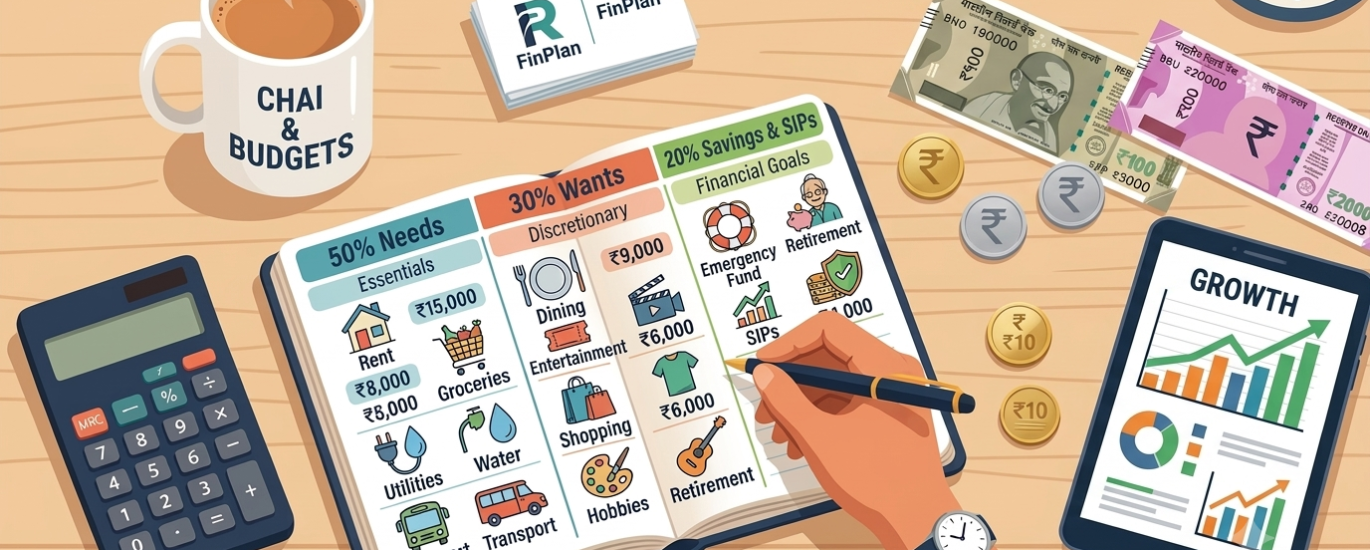
The 50/30/20 budget rule is a simple method for dividing your monthly income into three broad categories: needs, wants and savings or debt repayment. A common starting framework is 50% for needs, 30% for wants and 20% for savings or debt repayment, but these percentages can be adjusted according to your income, family responsibilities and financial goals.
The 50/30/20 rule is not an official financial rule prescribed by RBI or SEBI. It is a budgeting framework that can help you organise spending and build better saving habits.
Key Facts
- 50% of income is generally allocated to essential expenses.
- 30% is generally allocated to wants and lifestyle expenses.
- 20% is generally allocated to savings, investments or debt repayment.
- The percentages are guidelines, not mandatory limits.
- People with high rent, loan payments or family responsibilities may need a different allocation.
- Budgeting should consider both current expenses and future financial goals.
- SEBI describes budgeting as a process of tracking, planning and controlling income and expenses.
What Is the 50/30/20 Budget Rule?
The 50/30/20 rule divides your income into three spending categories: needs, wants and financial priorities.
The framework is useful because it gives you a simple structure for deciding how much of your income should go toward regular living costs, discretionary spending and future financial security.
| Category | Suggested Allocation | Examples |
|---|---|---|
| Needs | 50% | Rent, groceries, electricity, transport, insurance |
| Wants | 30% | Dining out, entertainment, shopping, holidays |
| Savings and debt | 20% | Emergency fund, investments, debt repayment |
These percentages should not be treated as fixed requirements. SEBI financial education material also recognises that budgeting needs to account for individual income, expenses, debts and financial goals.
How Does the 50/30/20 Rule Work in India?
The rule works by assigning every part of your monthly income to a broad financial category before you spend it.
For example, if your monthly take home income is ₹50,000, a basic 50/30/20 allocation would look like this:
| Category | Percentage | Amount |
|---|---|---|
| Needs | 50% | ₹25,000 |
| Wants | 30% | ₹15,000 |
| Savings and debt | 20% | ₹10,000 |
| Total | 100% | ₹50,000 |
The objective is not to follow these numbers perfectly every month. The objective is to create a spending structure that leaves room for savings and financial goals.
For a detailed process, see our guide on how to create a monthly budget in India.
50% for Needs
Needs are expenses required for normal living and financial commitments.
Common examples include:
- House rent or home loan payments
- Groceries
- Electricity and water bills
- Mobile and internet bills
- Transportation
- Essential medical expenses
- Insurance premiums
- Minimum loan payments
- Basic household expenses
Your needs category can be higher than 50% if you live in an expensive city or have significant family responsibilities.
The important point is to identify whether an expense is genuinely necessary before placing it in this category.
30% for Wants
Wants are expenses that improve your lifestyle but are not essential for basic living.
Examples include:
- Restaurant meals
- Online shopping
- Entertainment
- Weekend trips
- Premium subscriptions
- Expensive gadgets
- Hobbies
- Non essential clothing
- Luxury purchases
A high wants category can reduce the amount available for savings. If you are struggling to build savings, reviewing your wants is often easier than cutting essential household expenses.
You can also use a needs versus wants framework to decide which expenses should remain in your monthly budget.
20% for Savings and Debt Repayment
The final 20% is intended for improving your financial position.
It can be divided between:
- Emergency fund
- Bank savings
- Investments
- Retirement planning
- Additional loan repayment
- Other planned financial goals
SEBI financial education material explains that the amount left after expenses represents savings and that savings can help people work toward their financial goals.
If you do not have an emergency fund, building one can be an important priority before increasing long term investments.
Read our guide on how to build an emergency fund in India for a detailed approach.
50/30/20 Example for a ₹30,000 Salary
A person earning ₹30,000 per month could use the framework as follows:
| Category | Percentage | Monthly Amount |
|---|---|---|
| Needs | 50% | ₹15,000 |
| Wants | 30% | ₹9,000 |
| Savings and debt | 20% | ₹6,000 |
Suppose the person spends ₹16,000 on essential expenses. The needs category is already above the suggested 50% allocation.
In that situation, the person could reduce discretionary spending instead of treating the 50% figure as a strict requirement.
Example for a ₹75,000 Salary
For a monthly take home income of ₹75,000:
| Category | Percentage | Monthly Amount |
|---|---|---|
| Needs | 50% | ₹37,500 |
| Wants | 30% | ₹22,500 |
| Savings and debt | 20% | ₹15,000 |
If the person has no major debt and already maintains an emergency fund, part of the ₹15,000 allocation could be directed toward suitable investments based on financial goals, time horizon and risk tolerance.
SEBI recommends that investment decisions should be considered in relation to factors such as financial situation, risk appetite and investment horizon.
Is 50/30/20 Suitable for Everyone in India?
The 50/30/20 rule is not equally suitable for every household.
A person living with parents may have much lower housing expenses than someone paying rent in Mumbai, Delhi or Bengaluru. Similarly, someone with large education loans, medical expenses or family responsibilities may need to allocate more than 50% toward needs.
| Situation | Possible Approach |
|---|---|
| Low essential expenses | Increase savings |
| High rent | Reduce wants and adjust savings temporarily |
| Large loan payments | Prioritise debt repayment |
| No emergency fund | Give greater priority to emergency savings |
| Strong financial position | Increase investment allocation |
| Irregular income | Budget using conservative income estimates |
The objective should be sustainable financial management rather than blindly following a percentage.
50/30/20 Rule for Couples
Couples can apply the framework using combined household income.
For example, if the combined monthly take home income is ₹1,00,000:
- ₹50,000 can be planned for needs
- ₹30,000 can be planned for wants
- ₹20,000 can be allocated to savings, investments or debt repayment
Couples should also create separate financial goals for major expenses such as a home purchase, children’s education, insurance and retirement.
A financial goals by age plan can help organise these priorities.
50/30/20 Rule for Debt Management
People with significant debt may need to modify the standard framework.
Suppose your monthly income is ₹60,000 and your loan payments are already ₹20,000. Trying to keep all needs below ₹30,000 may not be realistic.
A better approach can be to temporarily reduce discretionary spending and direct additional money toward expensive debt while maintaining necessary savings.
You can also read our guide on how to pay off debt faster for practical debt reduction strategies.
Pros and Cons of the 50/30/20 Rule
Pros
- Easy to understand
- Simple to implement
- Creates a savings target
- Helps identify excessive lifestyle spending
- Provides a basic structure for salary management
- Can be adapted to different income levels
Cons
- The 50% needs limit may be unrealistic in expensive cities
- It does not consider every individual financial situation
- High debt can make the standard allocation difficult
- Irregular income requires additional planning
- It does not automatically determine the right investment product
How to Use the 50/30/20 Rule More Effectively
Start by calculating your actual monthly income rather than estimating it.
Next, track your expenses for at least one month and divide them into needs, wants and financial priorities.
Then compare your actual spending with your target allocation.
| Step | Action |
|---|---|
| 1 | Calculate monthly take home income |
| 2 | List all essential expenses |
| 3 | List lifestyle expenses |
| 4 | Calculate existing debt payments |
| 5 | Determine current savings |
| 6 | Identify areas where spending can change |
| 7 | Set a realistic savings target |
| 8 | Review the budget every month |
SEBI recommends calculating income, identifying essential expenses, recording debts, identifying non essential expenses and then calculating savings as part of the budgeting process.
Expert View
The 50/30/20 rule is best treated as a starting framework rather than a financial prescription. A good budget should reflect actual income, unavoidable expenses, debt obligations, emergency requirements and specific financial goals.
SEBI’s financial education material also emphasises that budgeting helps individuals understand where money comes from, where it is spent and how available resources can support long term goals.
Frequently Asked Questions
Is the 50/30/20 rule an official Indian government rule?
No. The 50/30/20 rule is a budgeting framework and is not an official budgeting requirement issued by RBI, SEBI or the Government of India.
Is 20% savings enough every month?
Twenty percent can be a useful starting target, but the appropriate amount depends on income, expenses, debt, financial goals and existing savings.
Can I save more than 20% of my income?
Yes. If your essential expenses and financial commitments are manageable, saving more than 20% can accelerate progress toward financial goals.
What if my needs are more than 50%?
Adjust the framework. You can reduce wants, increase income or temporarily use a different allocation that reflects your actual financial situation.
Does loan EMI come under needs?
A minimum required loan payment is generally a financial obligation that should be included in your essential commitments. Additional repayment can be considered part of your debt reduction strategy.
Should emergency fund savings be included in the 20%?
Yes. Emergency fund contributions can form part of the savings allocation until you have built an appropriate reserve.
Is 50/30/20 suitable for a ₹30,000 salary?
It can provide a starting structure, but people earning ₹30,000 may need to adjust the percentages based on rent, family responsibilities, debt and other essential expenses.
Should I follow 50/30/20 before investing?
You should first understand your cash flow, essential expenses, debt obligations and emergency savings needs. Investment decisions should then be aligned with your financial goals, time horizon and risk tolerance.
Sources
- SEBI Financial Education: Budgeting Guide
- SEBI Middle Income Group Financial Education Material
- SEBI Financial Education Booklet
- SEBI Investor Education Portal
Related Fundbone Guides
- How to Create a Monthly Budget in India
- How to Track Monthly Expenses
- Needs vs Wants: How to Control Spending
- How Much Should You Save Every Month?
- How to Build an Emergency Fund in India
- Personal Finance in India: Complete Guide
Disclaimer: This article is for educational purposes only and does not constitute financial, investment, tax or legal advice. Financial decisions should be based on your individual circumstances and, where appropriate, advice from a qualified professional.